


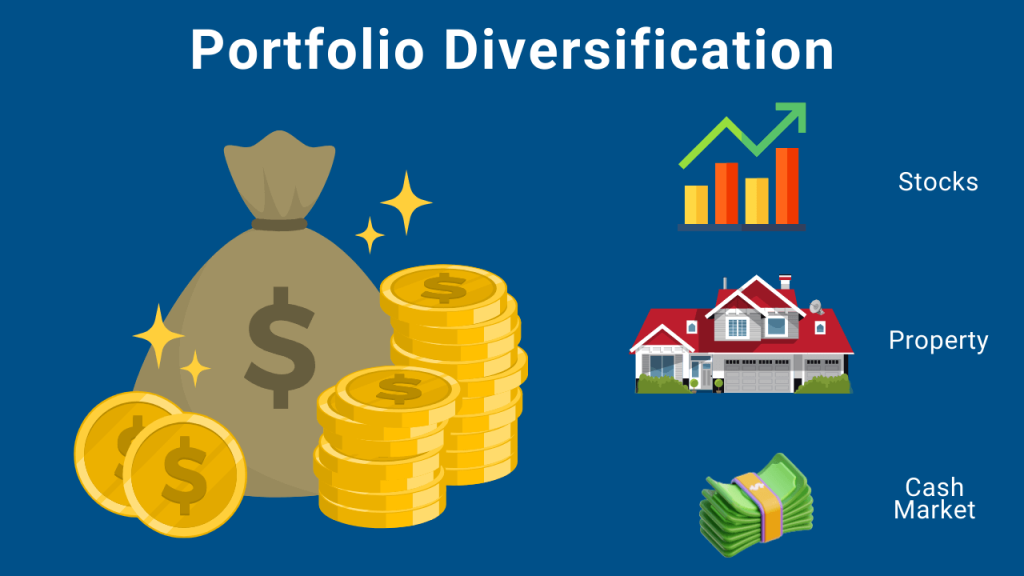
Diversification is perhaps the most critical principle in modern finance, serving as an investor’s best defense against market volatility and unforeseen economic shocks. It is often summarized by the adage, “Don’t put all your eggs in one basket.” For investors seeking long-term stability and consistent growth, particularly in dynamic Asian markets like the Philippines, understanding how to properly structure a diverse portfolio is non-negotiable. This comprehensive guide will explore the core strategies for effective diversification, moving beyond simple asset allocation to cover global exposure, sector balancing, and strategic portfolio maintenance, ensuring your capital is protected and positioned for resilience across various economic cycles.
Core Pillars of Diversification: Asset and Geographic Allocation
Effective diversification begins with spreading risk across different types of assets and different geographical regions. By doing so, investors reduce the likelihood that a downturn in one area (such as the Philippine stock market or a specific asset class like real estate) will decimate their entire portfolio. This approach is systematic and requires a clear understanding of correlation—how different investments move in relation to each other.
Asset Class Diversification: Balancing Stocks, Bonds, and Alternatives
The most fundamental layer of diversification involves allocating capital across different asset classes whose returns are not perfectly correlated, meaning they tend to react differently to the same economic events. A standard diversified portfolio typically includes a mix of stocks (equities), bonds (fixed income), and alternative assets. Stocks generally offer the highest potential returns but come with the greatest volatility. Within stocks, diversification means balancing large-cap, mid-cap, and small-cap companies, or even balancing growth stocks (which aim for high capital appreciation) and value stocks (which appear undervalued). Bonds, on the other hand, are the portfolio’s stabilizer; they typically provide lower, predictable returns and often increase in value when stocks decline, acting as a crucial counterbalance. Allocating capital between stocks and bonds based on your age and risk tolerance (e.g., a “100 minus age” rule for equity allocation) is a starting point, but a deeper strategy is required. Beyond these two main classes, investors should explore alternative assets, such such as real estate investment trusts (REITs), commodities (like gold or oil), or even private equity funds, depending on their liquidity needs and sophistication. Gold, for instance, often serves as a classic safe-haven asset, performing well during periods of high inflation or geopolitical instability when traditional paper assets struggle. The key here is not just owning different assets, but understanding their role and relationship within the portfolio. If a portfolio relies too heavily on local equities, it will be vulnerable to country-specific regulatory or political risks. By systematically allocating funds into multiple, uncorrelated asset classes, you dampen the portfolio’s overall volatility. This strategic allocation ensures that while some parts of your portfolio may be struggling during a market correction, others are holding steady or even appreciating, thereby smoothing out your overall investment returns over the long term and mitigating the need for emotional panic selling.
Geographic and Currency Diversification: Beyond the Local Market
For investors in the Philippines, limiting investments solely to the local market (PSEi) presents significant concentration risk, making geographic diversification an essential strategy. A robust portfolio must include exposure to global economic powerhouses and emerging markets to capture worldwide growth opportunities and hedge against domestic risks. This means allocating funds not just to the Philippine Peso (PHP) but also to major foreign currencies like the US Dollar (USD), Euro (EUR), or Japanese Yen (JPY). Geographic diversification can be achieved in several ways: purchasing global Exchange-Traded Funds (ETFs) that track indices like the S&P 500 (US), the FTSE 100 (UK), or the MSCI Emerging Markets Index; or investing in Philippine-listed funds that hold foreign assets. By expanding globally, the investor benefits from the growth cycles of different economies. For instance, if the Philippine economy faces a slowdown due to local policy changes, exposure to the US tech sector or European consumer staples can help maintain portfolio performance. Furthermore, currency diversification is a subtle but powerful risk management tool. Holding assets denominated in stronger, more stable currencies (like the USD) helps protect the portfolio’s value during periods when the PHP depreciates due to external or internal economic pressure, providing a natural hedge against currency risk and preserving purchasing power for future repatriation. It is not sufficient to simply buy foreign stocks; investors must also consider where the company generates its revenue. A mining company listed in Canada but deriving all its revenue from Africa still carries significant regional risk. True geographic diversification requires a thoughtful blend of investments across developed markets, which provide stability, and select emerging markets, which offer higher growth potential.
Strategic Portfolio Construction and Continuous Maintenance
Diversification is not a one-time event; it is an ongoing process that requires active maintenance, review, and rebalancing. Beyond the initial asset choices, true portfolio resilience comes from ensuring the chosen investments are not all susceptible to the same economic factors and that the investor adheres to a disciplined schedule for adjusting allocations. This stage focuses on correlation, sector balancing, and the vital practice of rebalancing.

Sectoral and Correlation Analysis: Minimizing Systemic Risk
A common mistake among new investors, especially those drawn to the excitement of technology, is over-concentration in a single sector, such as Tech or Financial Services, even if the companies are geographically diversified. While a US tech stock and a Philippine tech stock are geographically distinct, they are both highly vulnerable to global shifts in interest rates or regulatory changes targeting the tech industry. Sectoral diversification addresses this by ensuring your portfolio has exposure to industries that react differently to various economic phases. For example, during an economic expansion, Technology and Consumer Discretionary sectors may thrive. However, during a recession, defensive sectors like Healthcare (people always need medicine) and Utilities (people always need electricity) tend to be more resilient. A diversified portfolio should strategically allocate capital across cyclical sectors (Tech, Industrials) and non-cyclical/defensive sectors (Healthcare, Staples). Beyond sectors, investors must understand correlation. Correlation measures the degree to which two assets move in tandem. A correlation coefficient of +1.0 means assets move in perfect synchronization, offering no diversification benefit. A coefficient of -1.0 means they move in opposite directions, offering maximum diversification. The goal is to hold assets with a correlation close to zero or, ideally, negative. For instance, historically, gold and equities have often shown a low or negative correlation. By prioritizing low-correlation assets, the investor ensures that when one investment suffers a loss, the gains or stability from a low-correlated asset can cushion the blow, thus reducing the portfolio’s overall systemic risk—the risk inherent to the broad market itself.
The Discipline of Rebalancing: Maintaining Target Allocation
Even a perfectly diversified portfolio will drift over time. Market movements will cause some assets to grow faster than others, inevitably throwing off the original target allocation. For instance, if you started with a 60% stocks/40% bonds split, a strong bull market might cause stocks to grow to 75% of your portfolio within a year. While this might seem like a good thing (more profit!), it significantly increases the portfolio’s overall risk profile beyond your comfort level. This is where the disciplined practice of rebalancing becomes crucial. Rebalancing involves periodically selling a portion of the assets that have performed well (now overweight) and using that capital to buy assets that have lagged (now underweight) to restore the portfolio back to its target allocation (e.g., back to 60/40). This practice forces the investor to systematically “buy low and sell high”, removing the emotion from the investment process. Rebalancing can be done on a time-based schedule (e.g., annually or semi-annually) or on a threshold-based schedule (e.g., whenever an asset class deviates by 5% from its target weight). For Filipino investors using peso-denominated accounts for global assets, rebalancing can also involve adjusting for currency fluctuation effects. Maintaining the intended risk level is the primary goal of rebalancing. Without this discipline, the portfolio becomes increasingly concentrated in the best-performing, and therefore often the riskiest, assets over time, negating the entire benefit of diversification and exposing the investor to maximum danger when the inevitable market correction occurs.
Conclusion
Diversification is far more than a simple mix of stocks and bonds; it is a meticulous, multi-layered strategy involving asset classes, geographic regions, currency exposure, and market sectors. For investors in the Philippines, embracing global and low-correlation assets is the key to creating a truly resilient portfolio capable of weathering local and international economic storms. The effectiveness of this strategy relies heavily on the discipline of rebalancing, which ensures the portfolio’s risk level remains constant and prevents over-exposure to any single factor. By committing to continuous learning and maintaining your target allocations, you transition from merely participating in the market to strategically dominating your long-term financial future. What steps will you take this month to assess and refine your current portfolio’s diversification level?